Tahajjud Prayer
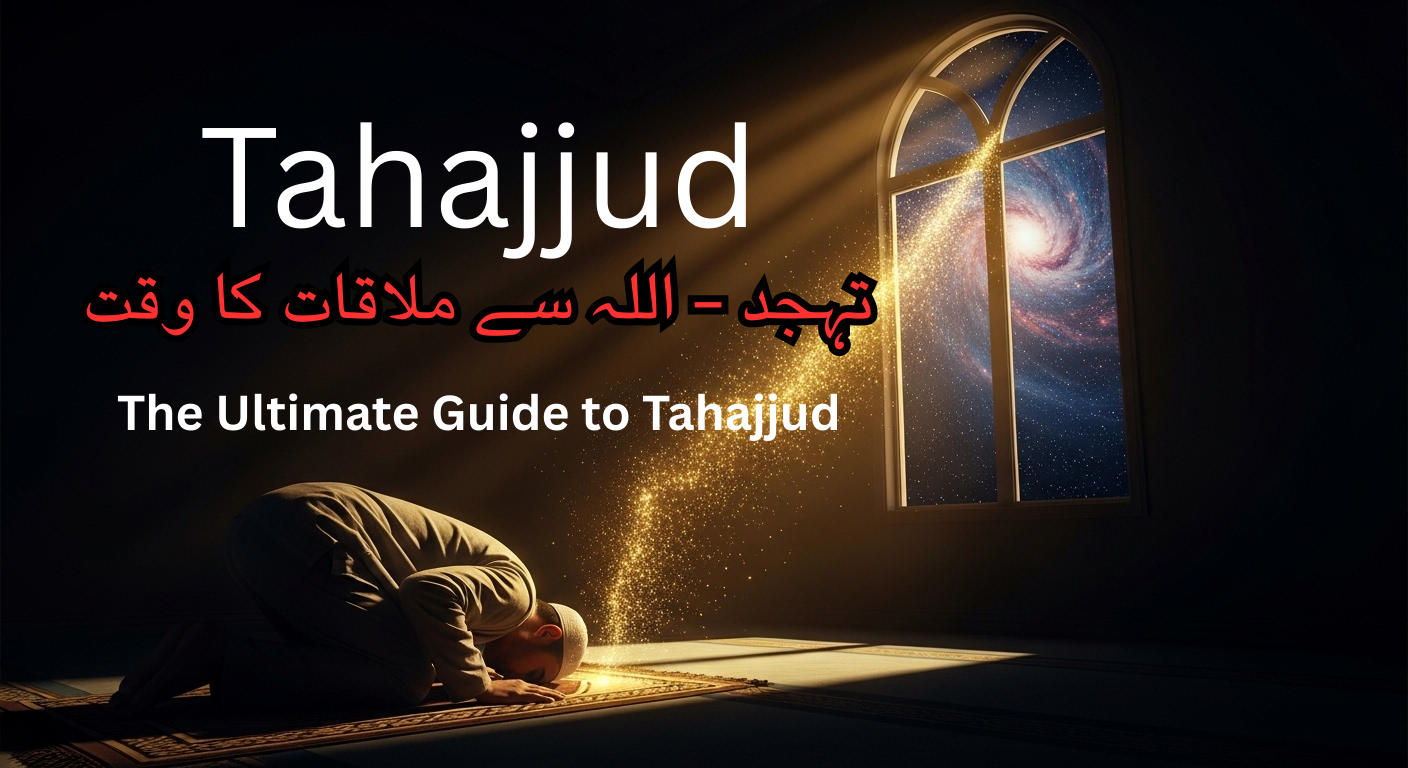
A Complete Guide to the Night Prayer That Can Change Your Life
Tahajjud In the journey of life, there are moments that can redefine our entire existence and encounters that rejuvenate the soul. But above all, there is Tahajjud—a profound meeting with our Creator in the most secret, serene part of the night. This is not just a voluntary prayer; it is a ladder of spiritual ascent for the believer, a spiritual charging station where one disconnects from the world to connect solely with Allah.
There is no doubt that Allah is closer to us than our jugular vein, but the time of Tahajjud is uniquely sacred. It was during these quiet hours that the Prophet Muhammad (ﷺ) would stand in worship for so long. The prayer was obligatory upon him, and he once remarked that if it were not for the difficulty it would cause his Ummah, he would have made it obligatory for us too.
Let us now delve into the depths of this blessed worship, exploring its virtues through the light of the Quran, the Hadith, and the experiences of the righteous.
1. A Divine Invitation: The Status of Tahajjud in the Quran
The significance of the Tahajjud prayer is so immense that Allah Himself mentions it directly in the Quran, marking it as a defining quality of His most beloved servants.
A Special Gift for the Prophet (ﷺ):
Allah commanded His beloved Prophet (ﷺ) to offer Tahajjud, promising him the highest station in this world and the Hereafter:
“And from [part of] the night, pray with it as an additional [worship] for you; it is expected that your Lord will resurrect you to a Station of Praise and Glory (Maqam-e-Mahmood).” (Quran, Surah Al-Isra, 17:79)
This “Station of Praise and Glory” is the station of the Great Intercession on the Day of Judgment, where all of humanity will look to the Prophet (ﷺ) with hope. This honor was a fruit of the nights spent in Tahajjud.
The Mark of the Servants of Ar-Rahman:
In Surah Al-Furqan, while listing the qualities of His chosen servants, Allah says:
“And those who spend [part of] the night to their Lord prostrating and standing [in prayer].” (Quran, Surah Al-Furqan, 25:64)
This means that night worship is the hallmark of those whom Allah lovingly calls “My servants.”
2. The Majesty of Tahajjud in the Light of Hadith
The Messenger of Allah (ﷺ) described Tahajjud as a treasure for the believer, its value greater than anything the world can offer.
When Allah Himself Calls You:
This Hadith is the very soul of Tahajjud. The Prophet (ﷺ) said:
“Our Lord, the Blessed, the Superior, comes down every night to the nearest heaven when the last third of the night remains, saying: ‘Is there anyone to invoke Me, so that I may respond to his invocation? Is there anyone to ask Me, so that I may grant him his request? Is there anyone seeking My forgiveness, so that I may forgive him?'” (Sahih al-Bukhari, Sahih Muslim)
This is not an ordinary invitation. It is an open call from the King of the Universe, extended every single night to every single person.
The Legacy of the Righteous:
The Prophet (ﷺ) advised us:
“You should perform Qiyam al-Layl (Tahajjud), for it was the practice of the righteous people before you. It is a means of getting closer to your Lord, an expiation for your sins, and a shield from committing sins.” (Jami` at-Tirmidhi)
3. Your Practical Guide: How and When to Pray Tahajjud
The Golden Hour:
The time for Tahajjud begins after the Isha prayer and lasts until the break of dawn (the beginning of Fajr). However, the most precious and virtuous time is the last third of the night. This is when sleep is deepest, and sacrificing it for Allah carries the greatest reward.
The Method of Prayer:
Rak’ahs (Units): The prayer is offered in units of two rak’ahs at a time. You can pray as many as you are able, but consistency is key. The common practice of the Prophet (ﷺ) was 8 rak’ahs of Tahajjud followed by 3 rak’ahs of Witr. Even starting with just two rak’ahs is a massive achievement.
Recitation (Qira’ah): Recite the Quran calmly and mindfully. If you don’t know long chapters, repeat the shorter ones you know well, pondering over their meanings.
Prostration (Sajdah): This is the most intimate part of Tahajjud. Lengthen your prostrations, for the Prophet (ﷺ) said that a servant is closest to Allah when in sajdah. In this position, pour your heart out to Allah in your own language, cry to Him, and unburden your soul.
Dua (Supplication): After completing the prayer, raise your hands and make heartfelt dua. This is a time when duas are answered.
4. The Gifts of Tahajjud: Its Transformative Impact on Your Life
Allah blesses the one who prays Tahajjud with countless gifts in this life and the next:
1. Spiritual Tranquility: Tahajjud removes anxiety and depression, filling the heart with a profound peace that nothing else can provide.
2. Acceptance of Duas: This is the hour of acceptance. The most difficult problems and seemingly impossible needs are fulfilled through the blessings of Tahajjud.
3. A Light (Nur) on the Face: When Hasan al-Basri (RA) was asked why those who pray Tahajjud have such radiant faces, he replied, “Because they secluded themselves with the Most Merciful (Ar-Rahman), so He dressed them with a light from His Light.”
4. Forgiveness for Sins: A single tear of regret shed in the darkness of the night can wash away a lifetime of sins.
5. An Unbreakable Bond with Allah: Tahajjud establishes a deep, personal relationship with your Creator, after which you no longer feel the need for any other support.
5. Practical Tips to Make Tahajjud a Part of Your Life
1. Sincere Intention (Niyyah): Make a firm and sincere intention before sleeping that you will wake up for Tahajjud.
2. Avoid Sins: Sins committed during the day can deprive a person of the blessing of waking up at night.
3. Take a Mid-day Nap (Qailulah): Following the Sunnah of taking a short nap in the afternoon greatly helps in waking up fresh at night.
4. Sleep Early: Make it a habit to sleep soon after the Isha prayer.
5. Recite Duas Before Sleeping: Recite the supplications for sleeping and Surah Al-Mulk.
6. Use an Alarm Clock: Set an alarm and place it far from your bed, so you have to get up to turn it off.
7. Ask Allah for Help: Before you sleep, make a simple dua: “O Allah, grant me the honor of standing before You.”
A Final Word:
The path of Tahajjud is one of courage and consistency. Shaytan will try to stop you, and the comfort of your bed will call to you, but remember: at that very moment, Allah is waiting to meet you.
Start with just two rak’ahs, but do not abandon the path. Insha’Allah, a day will come when your night will feel incomplete without Tahajjud.
please read this article : Al-Alamin: Unlocking the Quran’s Secret of the Worlds Through Science


